
Hero style
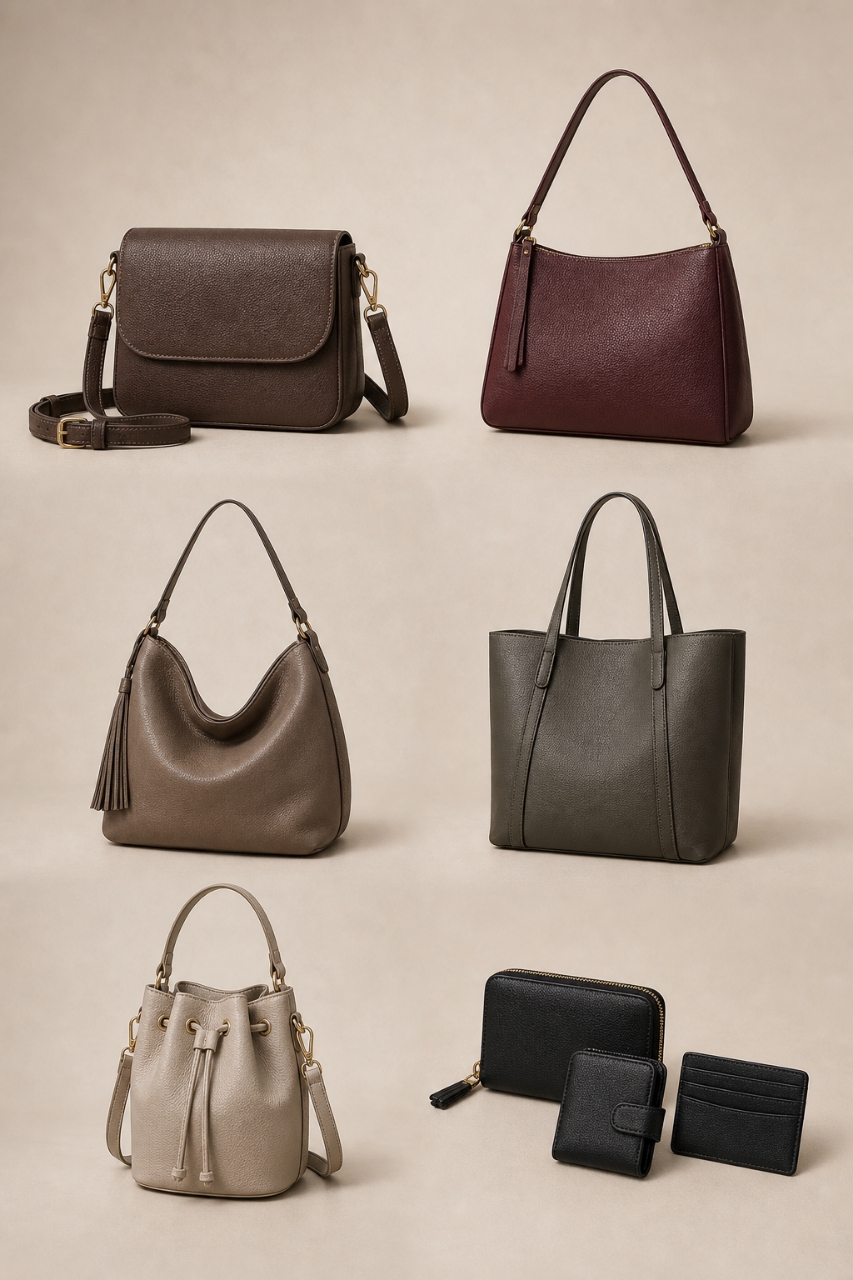
The clearest expression of the collection idea and target customer.
For fashion and accessories brands
BUYREAL helps brands turn a customer profile, price position and visual direction into a focused range of PU and vegan leather handbags—then prepares each approved style for consistent production.
Direct answer
Private-label development creates handbags that are sold under the buyer's own brand. It covers more than adding a logo: the product shape, function, material, hardware, lining, labels and packing need to work together for the target customer and price. BUYREAL coordinates those decisions from the initial brief through sampling and bulk production.
*Sampling timing starts after required materials and trims are confirmed.Brand expression
Every visible detail should support the same customer, price point and brand story.
| Development area | Decisions to define | Production consideration |
|---|---|---|
| Shape and function | Dimensions, opening, pockets, strap, carry options and capacity | Pattern, reinforcement and repeatable construction |
| Material | Surface, grain, hand feel, backing, color, lining and edge finish | Availability, supplier minimums and performance requirements |
| Logo and identity | Embossing, print, metal logo, puller, label or lining treatment | Artwork, molds, placement, finish and approval standard |
| Hardware | Color, weight, finish, zipper, buckle, ring and closure | Custom versus available components and consistency between styles |
| Packaging | Hangtag, care label, dust bag, protective packing and carton mark | Supplier minimums, packing tests and destination requirements |
Collection strategy
A focused first capsule makes approvals clearer and keeps material, hardware and color decisions under control. Related styles can share a recognizable detail without becoming identical products.
The clearest expression of the collection idea and target customer.
An accessible shape designed around everyday use and repeat sales.
A smaller bag, wallet or accessory using the same design language.
Core colors plus one seasonal direction, subject to material minimums.
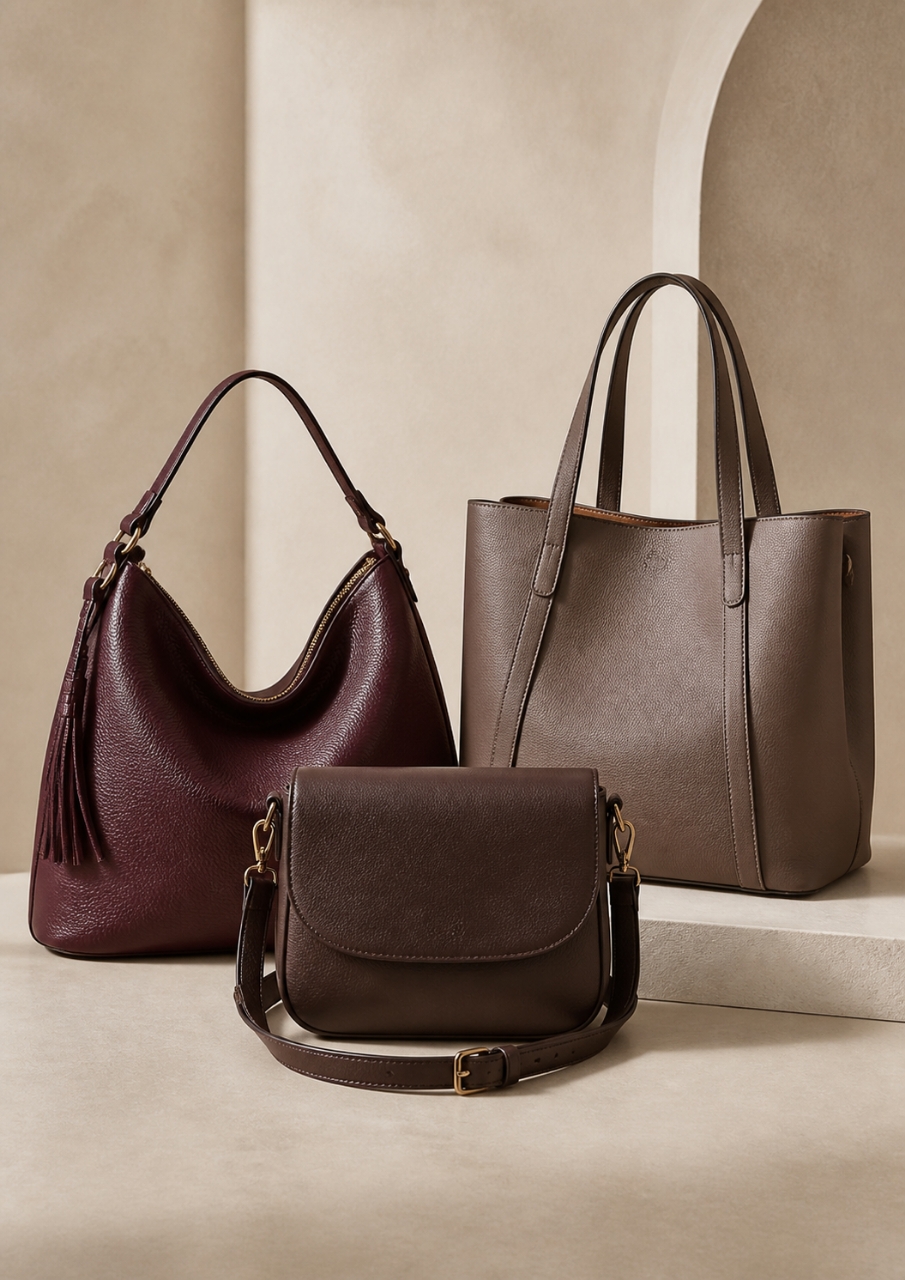
Related shapes can share material, hardware and signature details.
Development route
Customer, channel, retail price, product role and launch calendar.
References become original proportions, features and a coherent style plan.
PU direction, lining, color, hardware and trim options are narrowed.
Review proportion, function, construction, branding and workmanship together.
Confirm the sample, artwork, colors, packing and production requirements.
Bulk production follows approved references with in-process and final checks.
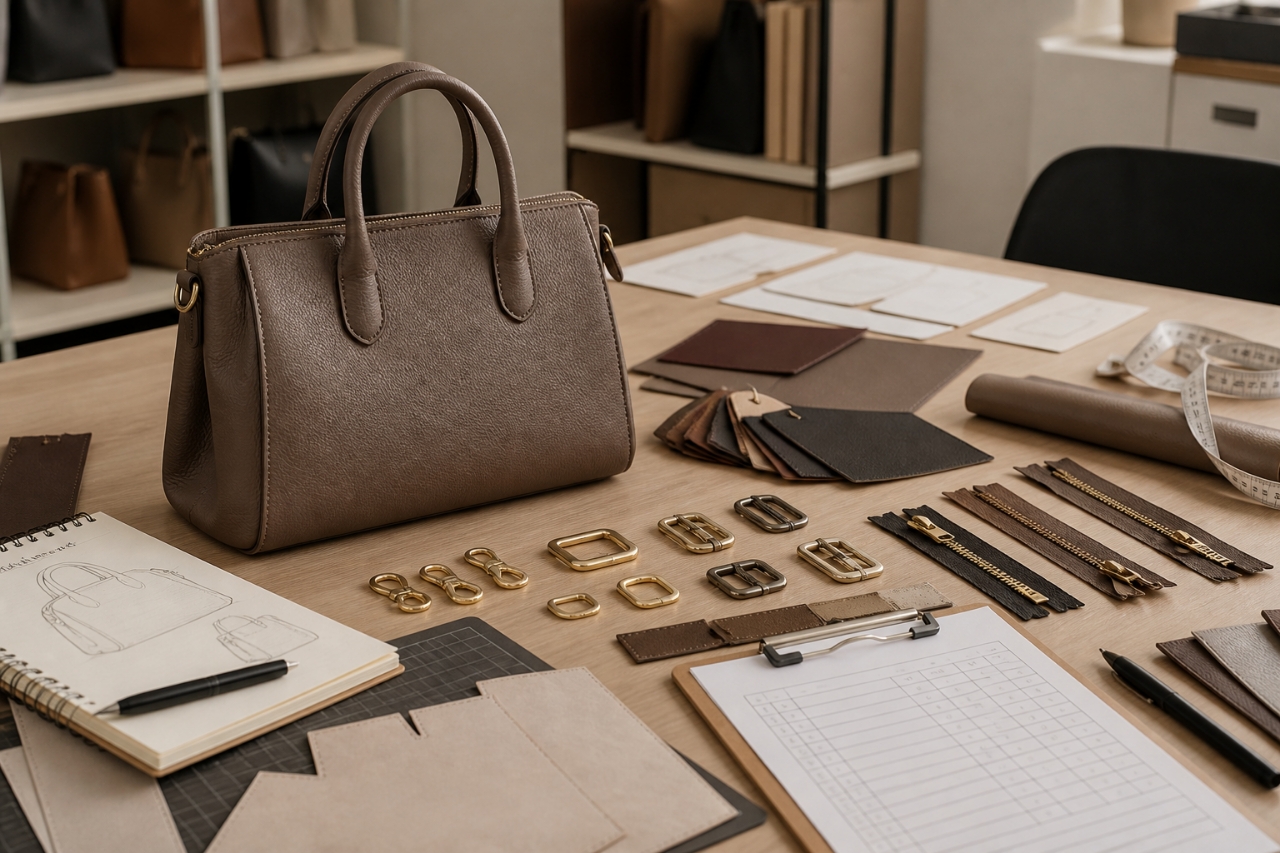
Price, appearance and performance are resolved together—not one at a time.
Commercial planning
Material, construction, hardware, logo method and packing all affect cost. Sharing the intended retail or target purchase price helps the development team propose workable options before time is spent on the wrong specification.
Buyer questions
Start with the target customer, intended retail price, product categories, reference direction, expected quantities and launch timing. A complete tech pack is useful but not required for an ODM-led project.
Reference images can communicate shape, function, material or styling direction. They should be used to clarify a new brand-owned design rather than copy protected details from another brand.
Depending on the style and supplier minimums, customization can include logo application, metal trims, lining, labels, hangtags, dust bags and packing. Each item should be confirmed during development.
MOQ starts from 300 pieces per style. Material, color, custom hardware and packaging supplier minimums determine the final workable split.
Begin with a focused capsule: two or three styles, one or two material directions and a controlled color plan. Confirm the target price and key construction details before opening too many options.
Start a conversation
Share the product category, target retail price, reference images, material direction, expected quantity and sample deadline. BUYREAL will respond with a practical development route.
Guangzhou Buyreal Leather Products Co., Ltd.